+86-13989680588
 graylin@hongjiavalve.com
 Get a quote

 English
 русский
 Deutsch
Submit feedback
Which Industrial Brass Fittings Work Best for High Pressure
Author: Hongjia
Date: Jun 12, 2026
Which Industrial Brass Fittings Work Best for High Pressure
In many industrial pipelines, pressure does not stay steady. It moves up and down during daily operation, sometimes in a slow way, sometimes in short and repeated changes. Pipes usually handle this movement with little visible change, while connection points behave differently. A fitting is small in size, yet it carries the same internal force as the rest of the system, which means any weakness there tends to show earlier than in other parts.
Industrial systems have also become more layered. One line may connect several devices, pass through different environments, and meet changes in temperature and vibration along the way. Under these conditions, Industrial Brass Fittings are often placed in situations where mechanical stability and sealing behavior matter more than appearance or simplicity.
Pressure resistance is not shaped by a single factor. Material choice plays a role, yet structure, surface condition, and installation method also take part. In real use, these elements overlap rather than work separately.
Why Are High Pressure Systems Becoming More Demanding
In practical operation, pressure rarely acts alone. It travels with vibration from pumps, temperature shifts from process changes, and occasional flow interruptions. When these conditions appear together, fittings are placed under a kind of repeated stress that is not always visible at the surface level.
A simple pipeline section may look stable during idle time, then behave differently once equipment starts running. Small movements occur at joints, and over long periods those movements slowly affect sealing surfaces.
Some common pressure-related conditions include:
- Pressure rising and falling during repeated cycles
- Mechanical shaking coming from nearby equipment
- Expansion and contraction caused by heat change
- Long running time with limited downtime
- Mixed media passing through the same system
Another point comes from system layout. Industrial piping is rarely straight or simple. Branch lines, direction changes, and equipment connections create many junctions, and each junction becomes a point where pressure behavior must be controlled rather than ignored.
Because of this, attention has gradually moved from short-term performance to how stable a connection remains after long exposure to working conditions that keep changing.
What Makes Industrial Brass Fittings Suitable for High Pressure Applications
Brass has stayed in use for a long time in connection parts, not because of a single advantage, but because several useful behaviors appear together in one material.
One of the key points is how it reacts under force. Brass has enough strength to hold shape during tightening and during operation, yet it does not become overly rigid. This balance matters during assembly, since small adjustments are often needed to achieve a stable seal.
Another practical reason is how it behaves in everyday industrial environments. Moisture, air exposure, and contact with different fluids are common, and surface condition can change slowly over time. Brass tends to resist this kind of gradual change, which helps reduce early wear at sealing surfaces.
From a manufacturing angle, brass is also easier to shape into detailed forms. Threads, grooves, and sealing edges can be produced with consistent geometry, which supports more predictable fitting behavior once installed.
A few points often considered in practice:
- Stable shape during tightening and use
- Resistance to surface deterioration in common environments
- Smooth machining for threaded and sealed structures
- Compatibility with different pipeline arrangements
- Reasonable balance between durability and processing effort
In many installations, brass is not chosen for one standout property, but for a combination that works together under real operating conditions.
Which Types of Industrial Brass Fittings Are Commonly Used in High Pressure Systems
Different connection styles exist because pressure systems do not operate in the same way everywhere. Some require frequent maintenance access, some focus on sealing stability, and others need to connect mismatched pipe sizes without disturbing flow conditions.
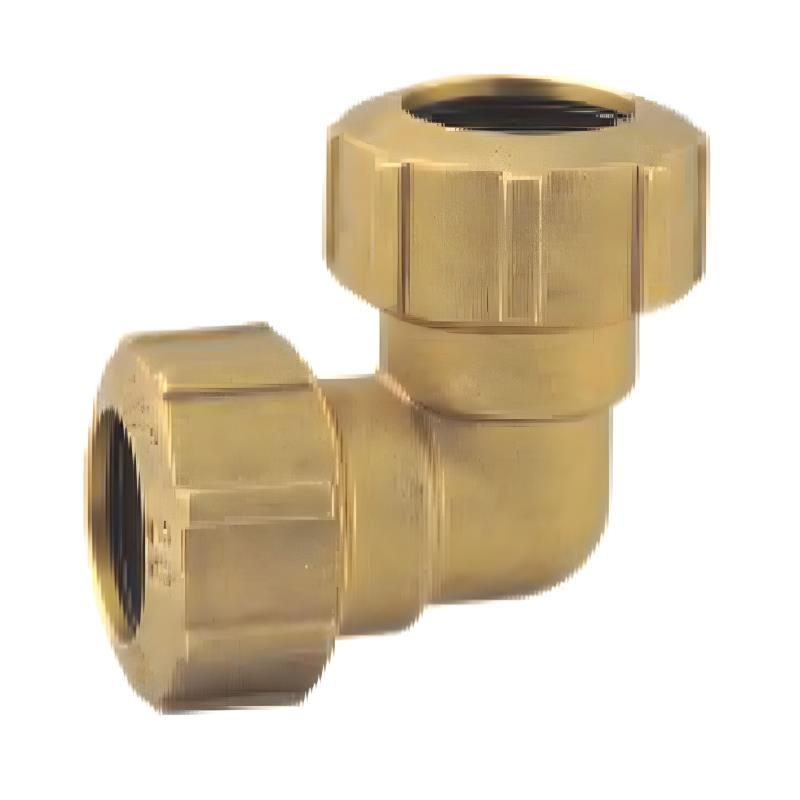
Compression fittings
Compression structures rely on pressure applied to a ring that grips the pipe surface. Once tightened, the contact zone forms a sealed connection without welding or heating processes.
This structure is often used where installation space is limited or where future adjustment is expected. The sealing effect depends strongly on correct assembly, since uneven tightening can influence how pressure spreads across the contact surface.
Threaded fittings
Threaded connections are widely used because of their familiar structure. Two parts engage through helical contact, forming a mechanical lock that can be opened again when needed.
They are often found in systems where parts may need replacement or inspection from time to time. The quality of thread shaping has a direct influence on sealing stability, especially under repeated pressure changes.
Flare fittings
Flare structures create a sealing surface by shaping the end of a tube outward, then pressing it against a matching surface. The contact area becomes wider, which helps distribute pressure more evenly.
In environments where vibration exists, this wider contact zone often helps reduce small movements that might weaken sealing over time.
Adapter and reducer fittings
Not all systems share the same pipe size or connection form. Adapters and reducers bridge those differences, allowing sections of different dimensions to work together within one network.
Although they appear simple, these parts often sit at points where flow changes direction or size, which means stress distribution around them deserves attention during system design.
How Does Fitting Design Affect Pressure Performance
Material alone does not decide how a fitting behaves under pressure. Shape and internal structure often change how force travels through the part.
When pressure enters a connection, it spreads through walls, threads, and sealing surfaces. If the structure is balanced, stress spreads more evenly. If not, certain points may carry more load than others, which can slowly affect performance.
| Structural Element | Influence on Operation |
|---|---|
| Wall form | Supports resistance against deformation |
| Thread shape | Affects contact stability |
| Surface smoothness | Influences sealing contact quality |
| Body geometry | Guides how force spreads |
| Contact zone | Controls sealing behavior under load |
Wall structure is often noticed first because it directly relates to strength. A thicker or more stable body can handle repeated pressure changes with less deformation over time.
Thread shape also plays a quiet but important role. When thread surfaces match closely, contact becomes more stable, and pressure paths become less irregular.
Surface condition may seem minor at installation stage, yet small irregularities can influence sealing behavior once pressure cycles begin repeating. Over time, these small differences can become more noticeable in system performance.
In real operation, these design features do not work alone. They interact continuously, and the final behavior depends on how well they are balanced within the fitting structure.
How Do Different Industrial Brass Fittings Work Across Application Environments
Industrial piping systems rarely stay within one fixed condition. A section that carries air in one area may connect to liquid transport in another, while nearby equipment adds vibration or heat changes that influence how joints behave over time. In such mixed environments, fitting selection tends to follow the actual working condition rather than a single theoretical pressure value.
Water-related systems often place attention on sealing stability and long-term contact with moisture. In these cases, connection points are expected to remain stable even when flow starts and stops repeatedly during daily operation. Brass components are frequently placed in these systems because surface condition tends to remain stable under constant exposure.
Pneumatic systems introduce a different type of pressure behavior. Air moves quickly, and pressure changes can appear in short cycles. Even small gaps at connection points may influence flow consistency. Fittings used in such systems usually need stable sealing contact and resistance to small vibrations caused by compressors or valves operating nearby.
Hydraulic-related environments bring higher internal force and more direct mechanical stress. Connection parts in these systems experience continuous loading, and slight changes in shape or alignment may affect overall performance. In such conditions, structure stability and thread engagement become more noticeable over time.
Industrial processing equipment often combines several conditions in one layout. Heat changes, vibration, and mixed media exposure can appear in the same system. Fittings used here usually face longer operating periods without interruption, which makes gradual wear behavior an important consideration rather than only initial performance.
Across these different environments, selection is often shaped by how the fitting reacts during repeated cycles rather than a single operating moment.
Which Material and Quality Factors Influence Industrial Brass Fittings Selection
Material behavior inside a fitting is not only about strength, it also relates to how the surface reacts after long contact with pressure and environment. Brass structures are generally chosen because they maintain shape during tightening and continue to hold connection stability during operation.
Internal consistency of the material plays a quiet role. When composition remains stable, deformation under stress becomes more predictable. If variation exists, pressure distribution may behave differently across similar parts in the same system.
Surface condition is another factor that affects long-term sealing behavior. Even when two fittings look similar during installation, small differences in smoothness or finishing may influence how tightly sealing surfaces contact each other once pressure begins cycling through the system.
Compatibility also matters in practical use. Industrial systems often combine pipes, valves, and connectors that come from different setups. When fitting geometry aligns properly with surrounding components, installation becomes smoother and stress at connection points is reduced.
Quality evaluation in practice often focuses on several visible and functional aspects:
- Uniform thread shape and engagement feel
- Smooth sealing surfaces without irregular marks
- Consistent body structure without visible distortion
- Clear alignment between connection ends
- Stable fit when assembled with matching components
These points are not isolated checks. They collectively indicate how a fitting may behave once it is placed under continuous operating conditions.
What Should Be Considered When Using Brass Fittings Wholesale Channels
In many industrial supply chains, fittings are not obtained one by one, since system construction or maintenance often requires multiple components at the same time. In such situations, sourcing through wholesale channels becomes a common approach for managing volume and consistency.
One important aspect is uniformity between batches. Even when parts share the same design, small variations in manufacturing can appear. These differences may not be visible during storage, yet they can influence installation behavior once the fittings are placed in the same system.
Supply continuity also becomes relevant when maintenance planning depends on consistent replacement parts. When fittings used in one section need to match those used earlier, stability in production becomes more important than short-term availability.
Practical evaluation during sourcing often includes:
- Consistency in dimensions across multiple pieces
- Stability of thread engagement during assembly
- Surface condition that remains uniform across batches
- Packaging that reduces deformation during transport
- Compatibility with existing piping configurations
Wholesale sourcing is not only about quantity. It also affects how predictable system maintenance becomes over time, especially when parts need to match existing installations without adjustment.
How Do Installation and Maintenance Influence Long-Term Performance
Even when fitting structure and material quality are suitable for pressure conditions, installation practice can still influence how the connection behaves over time. During assembly, small variations in tightening force or alignment may lead to uneven stress distribution at sealing surfaces.
When threads are engaged, pressure does not spread instantly. It builds gradually across contact points. If alignment is slightly off, one side may carry more load than the other, which can slowly affect sealing stability during repeated operation.
Maintenance activity also plays a role in long-term behavior. Systems that remain accessible allow inspection of connection points before issues develop further. In environments where vibration is present, small adjustments may be required over time to maintain stable contact between surfaces.
Common practical considerations include:
- Careful alignment before tightening
- Gradual application of force during assembly
- Avoiding uneven load on one side of the connection
- Periodic inspection in vibration-prone areas
- Checking sealing surfaces during maintenance cycles
Over time, even well-designed fittings respond to operating conditions. Regular attention to connection points often helps reduce unexpected interruptions and supports more stable system behavior.
What Trends Are Influencing Industrial Brass Fittings Development
Industrial requirements continue to shift toward longer operating cycles with fewer interruptions. In response, attention has gradually moved toward improving structural consistency and reducing wear at connection points.
Manufacturing methods have also changed in ways that focus more on precision. Small improvements in shaping threads or refining surface finish can influence how fittings behave once exposed to repeated pressure cycles.
Material efficiency has become another consideration. Instead of increasing material usage, development often focuses on improving structural design so that stress is distributed more evenly across the fitting body. This approach supports stable operation without significant change in overall size or form.
Across different industries, expectations around connection reliability continue to rise, especially in systems that operate continuously or under mixed conditions. As a result, fitting design tends to evolve in a direction that emphasizes steady performance over extended periods rather than short-term capacity alone.