+86-13989680588
 graylin@hongjiavalve.com
 Get a quote

 English
 русский
 Deutsch
Submit feedback
What Makes Brass a Suitable Material for Industrial Water Lines
Author: Hongjia
Date: Jun 09, 2026
Water moves through pipes in factories, processing plants, and commercial buildings. The connections between those pipes need to seal tightly and stay sealed for years. Industrial Brass Fittings have served this role for a long time. The material itself brings several useful properties to water line applications.
Brass resists corrosion from fresh water better than many other metals. A steel fitting rusts when exposed to moisture over time. The rust flakes off and weakens the connection. Brass forms a thin protective layer on its surface instead of rusting through. That layer stays intact and prevents further corrosion.
The machinability of brass makes it a practical choice for manufacturers. Brass cuts cleanly without tearing or leaving rough edges. Threads cut into brass hold their shape well. A Brass Fittings Factory can produce large quantities of threaded parts with consistent quality because the material behaves predictably under cutting tools.
Brass also handles a wide temperature range without becoming brittle. Cold water lines see temperatures near freezing. Hot water lines carry water well above room temperature. The same Industrial Brass Fittings work in both situations. Plastic fittings may crack in cold weather. Some metals weaken when heated. Brass maintains its strength across the normal water temperature range.
| Material | Corrosion Resistance | Temperature Tolerance | Machining Quality | Typical Applications |
|---|---|---|---|---|
| Brass | Good in fresh water | Wide range | Excellent | Industrial water lines, plumbing |
| Stainless Steel | Very good | Wide range | Difficult | High purity or aggressive water |
| Plastic (PVC, PEX) | Very good | Limited range | Not machined | Drainage, irrigation, low pressure |
| Cast Iron | Poor in fresh water | Wide range | Fair | Drain lines, underground mains |
| Copper | Good | Wide range | Good | Small diameter plumbing |
The weight of brass fittings feels substantial in the hand. That weight comes from density. A dense material resists mechanical damage. A worker dropping a brass fitting on a concrete floor does not need to worry about cracking it. The same drop would break many plastic fittings.
How to Identify the Right Size of Industrial Brass Fittings for a Piping System
Choosing the correct size for Industrial Brass Fittings starts with understanding the pipe system. The pipe diameter determines the fitting size. A fitting that matches the pipe size connects properly. A fitting that does not match leads to leaks or restricted flow.
The measurement that matters most is the inside diameter of the pipe. Water flows through the opening. The fitting must have an opening at least as large as the pipe opening. A fitting with a smaller opening restricts flow and reduces system performance.
Pipe size naming causes confusion. A half inch pipe does not measure half an inch on the outside or the inside. The name refers to a nominal size that approximates the inside diameter of standard pipe. The actual dimensions follow established standards. A worker needs to know the nominal size of the pipe before selecting Industrial Brass Fittings.
Thread size follows the same nominal naming system. A half inch fitting has half inch threads. Those threads mate with half inch pipe threads. Mixing thread sizes from different systems creates problems.
Measuring tools help verify size before purchase. A caliper measures the outside diameter of the pipe. A thread gauge checks the number of threads per inch. Both measurements together identify the correct nominal size. A worker who measures first avoids buying the wrong fittings.
How Does Thread Type Matter When Selecting Brass Fittings for Water Lines
Threads do two jobs. They hold the fitting onto the pipe. They also create a seal against leaks. The thread type determines how well each job gets done.
NPT threads, or National Pipe Taper, are common in North America. The threads taper slightly along the length of the fitting. As the fitting tightens, the threads wedge together. The wedging action creates a mechanical seal. Pipe compound or tape fills any remaining gaps.
BSP threads, or British Standard Pipe, appear in many other regions. BSP comes in two versions. Parallel threads have the same diameter along the whole length. Tapered threads taper like NPT. Parallel threads need a separate sealing method like a washer or O ring.
Mixing thread types causes leaks. An NPT male fitting threaded into a BSP female fitting may feel tight at first. The thread shapes do not match perfectly. Gaps remain between the threads. Water finds those gaps. A slow leak develops over time.
A reliable Brass Fittings Factory stamps thread information on each fitting or its packaging. The stamp might say NPT or BSP. It might show a thread size like one half inch or three quarter inch. A buyer checks this information before ordering.
Sealing method also depends on thread type. Tapered threads need sealant. Parallel threads with a washer do not need sealant on the threads. Using the wrong sealing method causes leaks even with the correct thread type.
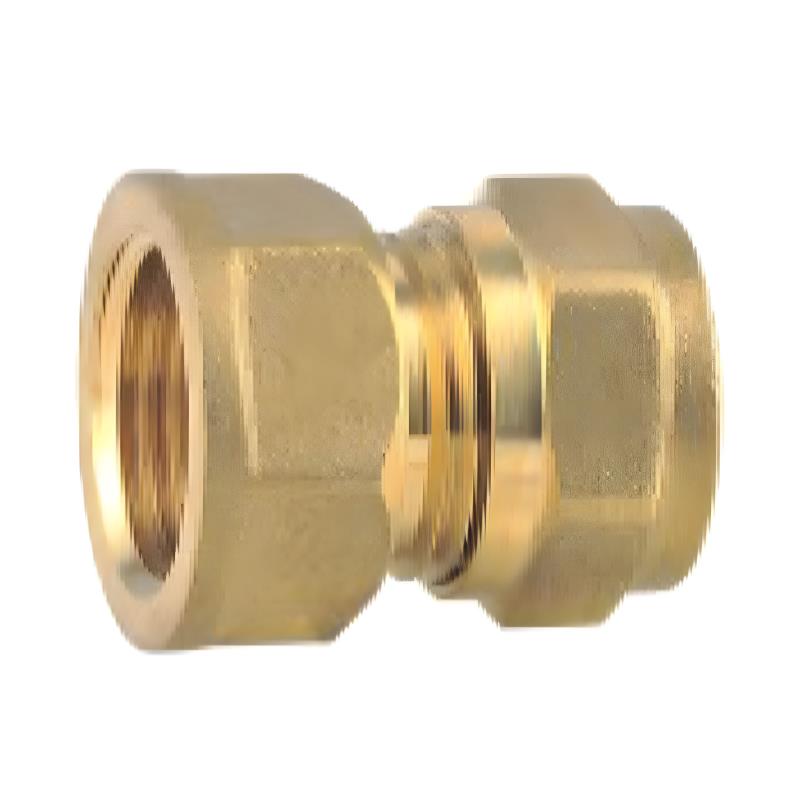
What Happens to a Fitting When Pressure Exceeds Its Rating
Every fitting has a pressure rating. The rating comes from testing. A sample fitting gets pressurized until it fails. The safe working pressure is a fraction of that failure pressure. Staying within the rating keeps the system safe.
Exceeding the pressure rating stresses the fitting material. Brass stretches under high pressure. A fitting that stretches slightly may not leak immediately. The stretching weakens the material. A later pressure spike causes failure.
The weakest point on a brass fitting is often the thread root. The thread cutting process removes material. The remaining material at the bottom of each thread carries the load. High pressure concentrates stress at those points.
A fitting subjected to pressure above its rating may fail in several ways. The fitting body may bulge outward. A crack may form along the length of the fitting. The threads may strip and blow out of the connection. The failure often happens suddenly without warning.
Industrial Brass Fittings for high pressure systems have thicker walls. More material around the bore means more strength. A visual comparison shows the difference. A high pressure fitting looks heavier and more substantial than a low pressure version of the same size.
Why Does Lead Content Matter in Brass Fittings for Water Lines
Traditional brass contains lead. The lead improves machinability. Lead acts as a lubricant during cutting and threading. A Brass Fittings Factory can produce threaded parts faster and with better surface finish when using leaded brass.
Lead also poses a health concern. Lead leaches into water that sits in contact with brass fittings. Drinking that water introduces lead into the body. Even small amounts of lead over long periods cause health problems.
Low lead brass addresses this concern. The lead content gets reduced to a very small percentage. Other elements like bismuth or silicon replace the lead. Low lead brass machines differently than standard leaded brass. The cutting tools wear faster. The surface finish may not be as smooth.
Regulations in many regions require low lead brass for drinking water systems. A home or school needs low lead Industrial Brass Fittings on any pipe carrying water for drinking or cooking. Industrial systems that do not carry drinking water may still use standard leaded brass.
A buyer looking for low lead fittings checks the product description. The term low lead appears on packaging and in specifications. A fitting without this marking likely contains standard amounts of lead.
The application determines the requirement. A water line in a factory cooling system does not need low lead brass. No one drinks that water. A water line in a breakroom sink does need low lead brass. Someone will fill a cup from that faucet.
How Does a Brass Fittings Factory Ensure Consistent Product Quality
A factory producing Industrial Brass Fittings follows a sequence of steps to maintain quality. The process starts with raw material. Brass ingots arrive at the factory with a known composition. A certificate from the material supplier confirms the alloy type.
The casting or forging process shapes the brass into fitting blanks. Casting pours molten brass into a mold. Forging presses heated brass into a die. Each method produces a different internal structure. Forged fittings have a denser grain structure and higher strength.
Machining follows the shaping step. Lathes and other cutting tools create threads, chamfers, and sealing surfaces. Computer controlled machines repeat the same cuts on every fitting. A human operator checks the first piece from each production run.
Testing happens throughout the process. A sample from each batch goes to a pressure test stand. Water or air pressure applies to the fitting. The fitting must hold pressure without leaking or deforming. Any failed sample leads to checking the whole batch.
The Brass Fittings Factory marks each fitting with identifying information. A stamp or laser etching shows the size, material, and sometimes the production date. That marking allows tracing a fitting back to its production records.
How to Distinguish Between Forged and Cast Industrial Brass Fittings
The manufacturing method affects how a fitting performs. Cast fittings start as molten brass poured into a mold. Forged fittings start as a solid piece of brass hammered into shape under pressure. A worker can tell the difference by looking closely.
Cast fittings often have a visible seam line. The seam comes from the two halves of the mold meeting. Forged fittings have no such line. The surface of a forged fitting looks smoother and more uniform.
The internal structure differs as well. Cast brass has a granular structure. Forged brass has aligned grain lines that follow the shape of the fitting. Those aligned grains give forged fittings higher strength. A forged fitting handles pressure better than a cast fitting of the same size.
The weight also differs. Forged brass is denser because the forging process removes internal voids. A forged fitting feels heavier than a cast fitting of the same dimensions. That extra weight indicates more material and better strength.
For most industrial water lines, cast Industrial Brass Fittings perform adequately. The pressures and temperatures stay within the capabilities of cast material. For high pressure systems or applications with vibration, forged fittings provide an extra margin of safety.
How to Inspect Industrial Brass Fittings for Surface Defects
A visual inspection catches many problems before installation. The fitting surface should look clean and uniform. No dark spots, pits, or cracks should appear on the brass.
Small pores on the surface indicate casting porosity. Porosity creates weak points. Water under pressure may seep through a porous fitting wall over time. A fitting with visible pores should be set aside.
The threads deserve close attention. Threads should have sharp peaks and clean valleys. Ragged or torn threads mean the cutting tool was dull or the material was too soft. A fitting with damaged threads will not seal properly.
The sealing faces on a fitting need a smooth finish. A union fitting has flat faces that press together. Any scratch or burr on those faces creates a leak path. A worker runs a finger across the sealing surface to feel for imperfections.
A reliable Brass Fittings Factory performs these same inspections before shipping. The factory rejects fittings with visible defects. But a buyer still inspects each fitting upon receipt. Shipping damage or a missed defect can happen.
What Factors Determine the Longevity of Brass Fittings in Water Systems
Water chemistry affects brass over time. Aggressive water with low mineral content leaches zinc from the brass. The fitting becomes porous and weak. Water with high chlorine content accelerates corrosion.
The connection to other metals matters. Copper and brass work well together. Steel and brass can cause galvanic corrosion. A dielectric fitting separates different metals to prevent this reaction.
Mechanical stress shortens fitting life. A pipe pulling sideways on a fitting puts constant force on the threads. That force adds to the pressure stress inside the fitting. The combined stress causes cracks to form earlier than expected.
Installation quality directly impacts how long Industrial Brass Fittings last. Over tightening stretches the threads. Under tightening allows movement and fretting. The correct torque gives the longest service life.
Temperature cycling creates expansion and contraction. Brass expands when hot and contracts when cold. Many cycles of heating and cooling work the material. Microscopic cracks grow with each cycle. A fitting that lasts decades at constant temperature may fail after years of daily temperature swings.
Where to Find Reliable Specifications for Industrial Brass Fittings
A fitting stamp carries basic information. Size and thread type appear as numbers and letters. The stamp may also show a material code or a factory mark. A buyer uses this information to confirm the fitting matches the order.
The product datasheet provides more detail. Pressure ratings, temperature limits, and dimensional drawings appear on the datasheet. A responsible Brass Fittings Factory makes datasheets available for every product. The datasheet should come from the factory, not a third party.
Test reports show actual performance. A factory tests samples from each production batch. The report lists the test results. A buyer who needs high reliability requests these reports before placing an order.
Industry standards establish minimum requirements for Industrial Brass Fittings. Standards cover material composition, thread dimensions, and pressure testing methods. A fitting that meets a recognized standard has passed established tests. The standard number on the packaging provides confidence that the fitting will perform as expected.