+86-13989680588
 graylin@hongjiavalve.com
 Get a quote

 English
 русский
 Deutsch
Submit feedback
Which Applications Suit Heavy Duty Angle Valve
Author: Hongjia
Date: Sep 29, 2026
Industrial valve applications can vary greatly according to pressure, temperature, fluid characteristics, flow requirements, and operating frequency. A valve installed in a compact mechanical system may face very different conditions from one used in a steam network or chemical processing line. When operating conditions become demanding, the valve structure needs to match the surrounding system rather than being selected by connection size alone.
Heavy Duty Angle Valve are commonly considered for systems where pressure changes, elevated temperatures, repeated operation, or difficult media create additional demands on the flow control assembly. Their angled flow path can also help with pipe arrangement where a straight‑through connection would require more installation space or create an inconvenient pipe layout.
What Conditions Call for Heavy Duty Angle Valve
Heavy‑duty applications generally involve several operating factors at the same time. High pressure may place greater mechanical stress on the valve body and connection points, while elevated temperature can affect sealing components and material stability. Frequent opening and closing can add another form of mechanical wear.
Flow requirements also influence the selection process. A valve used in a process line needs to maintain a suitable flow path without creating unnecessary restrictions. In some systems, the valve may also need to isolate equipment during inspection or maintenance.
Several conditions can indicate that a heavy‑duty design should be considered:
- Significant pressure changes within the pipe system
- High‑temperature fluids or heated process lines
- Frequent opening and closing
- Continuous operation over extended periods
- Fluids that may affect internal or sealing materials
- Limited installation space around equipment
- Systems requiring regular isolation and maintenance
The angle‑shaped body provides another practical consideration. Since the inlet and outlet are positioned at an angle, pipe routing can sometimes be arranged around equipment more conveniently. This can be useful in mechanical assemblies where valves, pipes, pumps, and other components need to share a restricted area.
Material selection also becomes important under demanding conditions. The valve body, internal components, and sealing parts need to remain compatible with the operating environment. A suitable design is not determined by pressure or temperature alone; the interaction between the fluid, operating conditions, installation position, and maintenance routine also matters.
How Heavy Duty Angle Valve Used in Steam Systems
Steam systems place particular demands on flow‑control components because temperature and pressure can change during operation. Steam lines may connect heating equipment, process machinery, condensate lines, and other parts of an industrial installation. Valves in these areas need to maintain controlled flow while tolerating the surrounding thermal conditions.
An angle valve can be installed where the direction of a pipe needs to change within a relatively compact arrangement. The body shape can help reduce the need for an additional pipe bend in some layouts, depending on the equipment configuration.
Common applications include:
- Steam supply lines connected to industrial equipment
- Connections around boilers and heating equipment
- Steam distribution sections
- Condensate‑related pipe arrangements
- Isolation points near equipment requiring maintenance
Thermal movement is an important consideration. As a pipe heats and cools, its length and mechanical stress can change. The valve and its connections need to remain properly supported and sealed while the surrounding pipework moves.
Sealing performance also deserves attention. Repeated exposure to heat can gradually affect sealing materials, particularly when the valve is opened and closed regularly. The selected materials need to correspond with the temperature and fluid conditions of the system.
Steam applications can also involve sudden changes in operating conditions. Opening a valve too quickly may cause a rapid change in flow, while an unsuitable installation can place additional stress on connected pipework. Valve selection and installation should account for the operating sequence rather than focusing only on the static condition of the system.
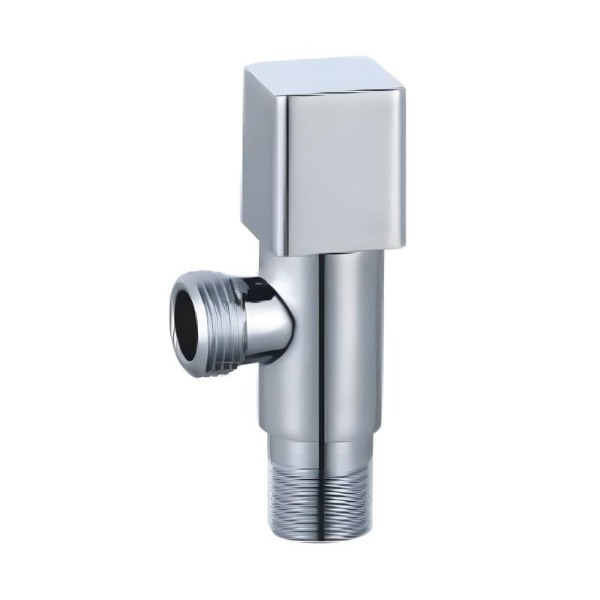
Where Are Angle Valves Used in Industrial HVAC and Water Systems
Industrial HVAC and water systems involve a wide range of fluid circulation tasks. Water may be moved between heating equipment, cooling equipment, storage areas, and distribution lines. In larger facilities, pipe networks can contain numerous changes in direction, equipment connections, and isolation points.
The angled configuration can be useful where pipe routing needs to turn near a piece of equipment. It may also provide a practical connection arrangement when space around the pipe is limited.
Typical applications include:
- Heating and cooling water circuits
- Industrial equipment cooling lines
- Building service pipe networks
- Municipal water distribution equipment
- Equipment isolation points
- Water circulation systems requiring regular maintenance
Flow conditions need to be considered alongside the pipe arrangement. A valve that creates an unsuitable restriction may affect circulation, pressure distribution, or equipment operation. The internal flow path should correspond with the requirements of the surrounding system.
Water quality is another consideration. Clean water, treated water, and industrial process water can have different effects on internal surfaces and sealing materials. Sediment, suspended particles, or chemical treatment can also influence service conditions.
Installation conditions can change from one location to another. A valve installed in an accessible mechanical room may have different maintenance requirements from one positioned inside a compact equipment assembly. Space around the handle or actuator, visibility of the connection points, and access for inspection all influence practical installation.
Temperature should also be considered. Heating circuits expose valves to warm fluids, while cooling systems may involve lower fluid temperatures and condensation around external surfaces. The selected construction needs to remain suitable across the expected operating range.
Why Are Angle Valves Used in Chemical Processing and Refineries
Chemical processing environments can involve liquids and gases with different temperatures, pressures, and chemical properties. Valve materials therefore need to match the fluid being handled as well as the surrounding conditions.
In these applications, an angle valve may be used for flow control or equipment isolation in sections of a process line. Its compact body arrangement can be useful around vessels, pumps, processing equipment, and pipe branches where a change in flow direction is required.
Material compatibility is a central consideration. Different fluids can react differently with metal surfaces and sealing components. A material that performs appropriately in a water system may not have the same suitability in a chemically aggressive environment.
| Application condition | Main consideration |
|---|---|
| High temperature | Resistance of body and sealing materials to heat |
| Pressure variation | Mechanical strength and connection stability |
| Corrosive fluid | Compatibility between fluid and valve materials |
| Frequent operation | Wear resistance of moving and sealing parts |
| Gas service | Sealing condition and connection integrity |
| Restricted installation area | Body shape and maintenance access |
Thermal stress can also affect chemical processing equipment. Heating and cooling cycles may cause repeated expansion and contraction in connected components. A valve installed between sections of rigid pipework needs suitable support and alignment to reduce unnecessary mechanical loading.
Corrosive media require particular attention to both internal and external surfaces. Material selection should reflect the actual operating fluid instead of relying on general assumptions about the industry. The same processing facility can contain different lines with very different service conditions.
Maintenance access is equally relevant. A valve that requires regular inspection should be positioned so that connection points and operating components can be reached without disturbing nearby equipment. In process environments, maintenance planning is closely connected with valve placement.
How Do Right Angle Valves Fit Vacuum Processing Systems
Vacuum processing equipment presents a different operating environment from conventional liquid and steam systems. Instead of controlling a pressurized fluid flow, the valve may be used to separate equipment sections, control gas movement, or isolate a vacuum chamber from connected equipment.
The right‑angle configuration can suit vacuum systems where the pipe or port needs to change direction within a compact assembly. Such arrangements can be found around vacuum pumps, processing chambers, and connecting lines.
Several factors influence valve selection in these applications:
- Required isolation between equipment sections
- Frequency of switching between operating states
- Internal cleanliness requirements
- Sealing performance under reduced pressure
- Available installation space
- Compatibility between internal materials and the process environment
Repeated switching can place additional demands on moving components. A valve used frequently may experience more mechanical movement than one operated only during occasional maintenance. Sealing surfaces and actuating parts should be considered together when assessing the operating conditions.
Vacuum applications also place greater emphasis on leakage control. Even a small unwanted gas path can affect the condition of a vacuum system. Proper connection, sealing, alignment, and maintenance all contribute to stable operation.
The surrounding process also matters. Some vacuum equipment handles relatively clean environments, while other systems may expose internal surfaces to particles, vapors, or process residues. Valve construction and maintenance practices need to reflect the conditions inside the connected equipment.
Right‑angle configurations can provide a practical way to organize these connections without adding unnecessary bends to the surrounding pipework. The final arrangement still needs sufficient space for inspection, operation, and replacement of serviceable components.
Are Angle Seat Valves Suitable for Sterilization and CIP Systems
Sterilization and cleaning systems create demanding conditions for valve components. Heated water, cleaning solutions, moisture, and repeated opening and closing can all affect internal parts and seals. Food processing and other hygiene‑sensitive production lines also require pipework that can be cleaned without leaving difficult‑to‑reach areas.
Angle seat valves can fit these applications when their materials and structure correspond with the cleaning conditions. Pneumatic operation can be useful where valves need to respond repeatedly during automated cleaning procedures. The valve position should also allow drainage after washing, since trapped moisture can increase cleaning and maintenance work.
Several factors deserve attention:
- Cleaning temperature and chemical exposure
- Frequency of valve operation
- Internal surface condition
- Drainage around the valve
- Access for inspection
- Condition of sealing components
Repeated exposure to heat and cleaning fluids may gradually affect seals. The operating environment should be considered together with the expected frequency of movement rather than treating cleaning conditions and mechanical wear as separate issues.
How Do Media and Operating Conditions Affect Valve Selection
The medium inside a pipe has a direct effect on valve construction. Water, steam, gas, cleaning fluids, and process liquids can place different demands on the body and sealing parts.
Temperature affects material behavior, while pressure places mechanical loads on the valve and its connections. Chemical properties can also influence material compatibility. Flow conditions matter when the internal passage needs to accommodate a particular circulation requirement.
Before selecting a valve, several questions can help define the application:
- What fluid will pass through the valve?
- Is the medium hot, cold, liquid, or gaseous?
- How often will the valve operate?
- Will pressure or temperature change during use?
- Could the medium affect the body or sealing materials?
- What external conditions surround the installation?
Heavy Duty Angle Valve may be used in demanding systems when their construction matches these conditions. Valve materials, sealing arrangements, connection methods, and operating mechanisms need to be considered as a complete system rather than selected separately.
What Installation Factors Matter in Heavy Duty Systems
Installation affects valve operation long after the pipework has been assembled. Misalignment, insufficient support, or restricted access can create problems even when the valve itself suits the service conditions.
The angled body can help arrange pipework where a change in direction is required. Space around the valve still needs to accommodate operation, inspection, and maintenance.
Key installation points include:
- Align connected pipes without forcing the valve into position
- Support heavy pipe sections separately from the valve body
- Leave clearance around handles or actuators
- Check the intended flow direction
- Keep serviceable components accessible
Heating and cooling systems require additional attention because pipework can expand and contract. Suitable support and alignment help limit unnecessary loads on valve connections.
What Maintenance Issues Should Be Checked in Heavy Duty Applications
Maintenance requirements depend on the medium, operating frequency, and surrounding environment. A valve handling clean water has different inspection needs from one exposed to steam, chemical fluids, or repeated cleaning.
Routine checks can include:
- Looking for leakage around connections
- Checking seals for visible wear
- Observing changes during opening and closing
- Inspecting the body for corrosion or damage
- Checking nearby pipe supports
- Examining exposed operating components
Changes in operating force can be useful indicators of developing problems. Unusual resistance may involve internal components, seals, or pipe alignment. Leakage may also originate from a nearby connection rather than the valve body itself.
Inspection should reflect actual service conditions. Frequent operation, high heat, chemical exposure, and repeated cleaning can each change the areas that require attention.
How Should Application Conditions Guide Angle Valve Selection
A practical selection process considers the complete operating environment rather than one specification in isolation.
- Fluid: Check the medium and its compatibility with body and sealing materials.
- Operation: Consider pressure, temperature, flow conditions, and operating frequency.
- Installation: Review pipe direction, available space, support, and access.
- Environment: Account for heat, moisture, cleaning fluids, dust, or chemical exposure around the valve.
- Maintenance: Make sure inspection and replacement can be carried out without creating unnecessary difficulties for nearby equipment.
Steam systems may place greater attention on heat and sealing. Chemical processing can require closer consideration of material compatibility. Vacuum equipment places greater emphasis on isolation and leakage control, while cleaning systems involve repeated exposure to heat, moisture, and cleaning fluids.
Matching the valve structure with the actual service environment gives the pipe system a clearer basis for installation and maintenance decisions. The same valve arrangement does not suit every application, so operating conditions and equipment layout remain important parts of the selection process.