+86-13989680588
 graylin@hongjiavalve.com
 Get a quote

 English
 русский
 Deutsch

Submit feedback
How Do Industrial Brass Fittings Improve Seal Reliability
Author: Hongjia
Date: Oct 23, 2026
A compressed-air line on a packaging machine loses pressure overnight. The compressor cycles more often, the actuators respond slowly, and a technician spends an hour with soapy water before finding a weeping joint at a coupling. The pipe was sound. The connection was not matched to its job.
Industrial Brass Fittings help create stable joints between pipes, tubes, valves, and equipment. The material is only one part of the picture. Thread design, sealing structure, dimensional consistency, installation quality, and the operating environment all decide whether a joint stays tight. The sections below cover each factor in turn.
Why Sealing Reliability Matters
Pipelines carry different media between machines and process areas. A leak affects more than the escaping material. It can change pressure, interrupt equipment, and add maintenance work that repeats until the real cause is found.
| Application | Sealing Consideration |
|---|---|
| Pneumatic equipment | Retaining compressed air |
| Hydraulic systems | Containing working fluid and keeping it clean |
| Water treatment | Preventing unwanted leakage |
| Refrigeration | Maintaining a closed circuit |
| Gas equipment | Using connections approved for the gas service |
| Automated piping | Holding up through repeated cycles |
In a pneumatic line, air loss wastes energy and slows actuators. In a hydraulic circuit, leaking fluid creates cleanliness and safety concerns. Water treatment and refrigeration systems face their own problems when a joint fails to contain the medium.
Each application has its own requirements. A fitting that suits one system should not be moved to another without checking the material, connection design, and service conditions. Maintenance teams also save effort when connections match the pipe and seal from the start, because repeated repairs at the same joint usually point to a selection problem and not bad luck.
Design Features That Support a Stable Seal
Fitting Form and Sealing Structure
Brass fittings come as threaded connectors, adapters, couplings, and compression styles. Each forms a seal differently. Some depend on matching threads plus a suitable sealing method. Others use a sealing ring, a compression element, or a dedicated contact face.
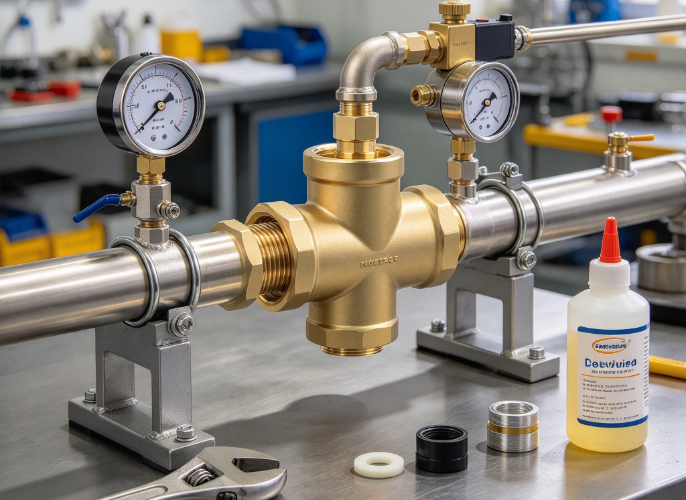
Parts that look alike can use different thread forms or sealing arrangements. Forcing them together damages the contact surfaces and invites leakage. A suitable design lets the installer create the intended joint without improvised adjustment, and it gives maintenance staff a clear basis for checking the connection later.
| Sealing Structure | Function | Important Check |
|---|---|---|
| Gasket | Seals between adjoining faces | Material and surface compatibility |
| O-ring | Seals at a designed contact area | Correct fit and condition |
| Compression element | Seals around compatible tubing | Tube and fitting compatibility |
| Thread sealing method | Supports sealing at a threaded joint | Correct thread type and procedure |
| Sealing face | Provides a defined contact area | Surface condition and alignment |
The seal material must also suit the medium and the temperature range. A compound that works with dry air may swell or soften in certain oils. The seal must also fit its groove, contact area, or compression arrangement as designed.
Threads
Threaded joints allow assembly and, where the design permits, removal for maintenance. Their sealing depends on the relationship between the threads, the contact surfaces, and the specified sealing method. Some joints seal on the threads themselves. Others rely on a separate gasket or face.
Thread standards differ in shape and dimensions, so matching the apparent size is not enough. A mismatched thread engages unevenly and may damage the contact surfaces. Extra tightening does not cure the mismatch and often makes it worse.
Consistent thread manufacturing reduces variation during assembly. This helps when the same fitting is used across many similar machines or production lines, since installers can follow one procedure with predictable results.
Brass Alloy and Corrosion
"Brass" covers several alloy compositions, so the alloy should match the application. Certain chemical conditions, water quality, moisture, and contact with other metals can affect a fitting over time. Corrosion near a thread or sealing face makes the joint harder to maintain and the parts harder to remove during service.
Dissimilar-metal joints need particular attention where the environment encourages corrosion. The risk depends on the materials in contact and the conditions around the joint. Review the fitting's material information and intended service, and do not assume brass resists every environment.
Routine inspection for discoloration, deposits, or surface changes catches trouble early. Any suspected material damage should be assessed before the connection returns to service.
Pressure Conditions
A fitting must suit the pressure of the system it serves. Judge the complete connection: pipe, connector, seal, and adjoining equipment. Appearance or material alone does not show whether a joint can handle the service.
Pressure requirements vary between pneumatic, hydraulic, and water systems. Startups, shutdowns, and flow switching also place repeated demands on a joint, so design for those transitions and not only for steady running. When conditions are uncertain, equipment documentation and engineering guidance should decide the selection.
Installation, Maintenance, and Automation
Installation Quality
A suitable fitting still leaks when installed poorly. Damaged pipe ends, misalignment, dirty sealing surfaces, wrong seals, or incorrect tightening all prevent the joint from forming as designed. Check that pipe and fitting match, clean the surfaces, and prepare them as the instructions describe.
If threads do not engage normally, find the cause instead of adding force. Resistance during assembly often signals a mismatch in thread form or size.
Fittings should not carry loads that belong to pipe supports. Vibration, movement, and misalignment stress a joint repeatedly and wear down the seal. After assembly, inspect and test according to the system's procedures. Correct any leakage or visible damage before normal operation continues.
Quick-Connect Designs
Quick-connect fittings suit systems where lines are joined and separated during routine work, such as tool changes or equipment servicing. They still need a sound seal. Dirt, wear, damaged seals, or incomplete engagement can compromise the joint.
A pneumatic line, a hydraulic circuit, and a fluid-handling system have different requirements. Confirm the medium, operating conditions, and connection procedure before choosing a product. Replace worn sealing parts as the manufacturer directs, and confirm that each connection is secure before returning to service.
Automated Piping
Pneumatic actuators, valves, and fluid control units rely on stable connections. A leak can disturb equipment response and interrupt nearby processes. Vibration, repeated pressure changes, and frequent switching should be considered during design, and the piping should be supported so joints are not carrying unnecessary loads.
Keep connections accessible. Teams can then inspect them during scheduled service without dismantling large sections of equipment, and small problems are found before they become production interruptions.
Purchasing, Customization, and Acceptance
What Buyers Should Check
Start with the application: what the fitting connects, which medium flows, and what conditions apply. Then review documentation covering thread standards, dimensions, material, and installation requirements. Clear information lets buyers compare products by actual need and not by appearance.
- Pipe or tube material
- Connection type and thread standard
- Fitting material compatibility with the medium
- Pressure and temperature suitability
- Correct seal or compression component
- Installation and maintenance instructions
- Product identification and batch documentation
These checks reduce ordering errors and make later replacement easier. They also give purchasing teams, installers, engineers, and suppliers a shared basis for communication.
OEM Customization
Non-standard layouts may call for a custom shape or connection arrangement. Define the pipe interfaces, available space, medium, operating conditions, and sealing method first. This shows whether a modified design is needed and what must be confirmed before production.
Changes are not cosmetic. They can alter sealing contact, material behavior, and compatibility with adjoining parts. Clear drawings, agreed specifications, and suitable inspection procedures keep production batches consistent, which matters for equipment that uses specialized or repeated connections.
Batch Acceptance and Communication
Similar-looking fittings serve different connection points, so mix-ups during storage, assembly, or replacement cause avoidable problems. Check identification, visible condition, connection details, and material documentation against the purchase requirements. Inspection should match the product, since a threaded connector, a compression fitting, and a quick-connect part have different needs.
Good records help the whole supply chain. Share pipe materials, connection standards, intended service, and conditions with suppliers when requesting a product. Keep labeling clear when several types ship together, so thread forms, seal types, and material options do not get mixed.
Industrial Brass Fittings improve sealing reliability when selection, documentation, installation, and inspection all follow the actual demands of the system.