+86-13989680588
 graylin@hongjiavalve.com
 Get a quote

 English
 русский
 Deutsch

Submit feedback
Are Industrial Brass Fittings Suitable for Mixed Pipes
Author: Hongjia
Date: Oct 16, 2026
A plant retrofit adds a plastic branch to an existing steel header, and the installer picks up a brass adapter. The thread looks right and the size label matches. Weeks later a slow weep appears at the joint. The parts fit by eye but not by standard, and the mismatch only showed under service conditions.
Industrial Brass Fittings can connect different pipe materials in many systems. Suitability depends on the materials joined, the connection design, the fluid, and the operating conditions. The sections below explain how to judge each factor before choosing a fitting.
Why Mixed-Material Systems Need Extra Care
Pipe materials are chosen for different jobs. Copper serves certain water lines, steel suits heavier industrial duty, and plastic offers chemical resistance and easy installation. Each transition between them adds a point where leakage, stress, or maintenance trouble can start.
A fitting has to work with the pipe on both sides, not merely assemble. A joint that holds on the day of installation may loosen after months of temperature swings, vibration, or pressure changes. Plan the system as a connected assembly rather than a set of separate parts, and look at every transition with the same attention.
| Pipe Material | Connection Consideration |
|---|---|
| Copper | Suitable joining method, contact compatibility |
| Steel | Thread form, corrosion behavior, mechanical support |
| Plastic | Correct adapter design, limits of the pipe material |
| Stainless steel | Material compatibility, service conditions |
| Brass components | Suitability for the fluid and adjacent materials |
What Brass Offers and Where It Connects
Brass is an alloy that machines easily into threaded adapters, couplings, and connectors. That range of forms makes it a practical transition point between compatible components. A threaded brass fitting may join a metal pipe, while a purpose-designed adapter may bridge to plastic.
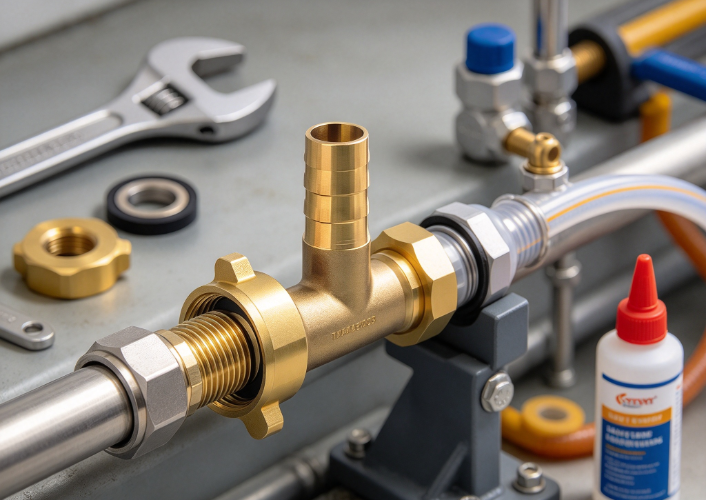
Brass is not compatible with every pipe or fluid. Alloy composition, fitting design, sealing method, and environment all matter. Some water conditions and chemical media can attack certain brass alloys, so the alloy named in the product documentation deserves a close read. Ask whether the specific fitting was designed for the materials and conditions at that joint.
| Connection Type | Typical Use | Key Consideration |
|---|---|---|
| Threaded | Components with matching threads | Thread form, sealing method |
| Compression | Suitable tubing | Tube material, fitting design |
| Transition adapter | Different piping systems | Compatibility on both sides |
| Soldered | Compatible copper parts | Approved fitting and method |
| Flanged | Flange-connected components | Matching flange and sealing |
Not every brass fitting supports every type. Confirm the intended method before ordering, especially for metal-to-plastic joints, where a wrong choice can crack the plastic side or leave the seal under-compressed.
Threads and dimensions
Two threaded parts can start to assemble and still be incompatible. Thread shape, pitch, and sealing approach differ between systems. Some seal on the threads themselves, while others seal on a separate surface or gasket. Confirm the thread standard from documentation instead of judging by sight or forcing parts together.
Overtightening damages threads and stresses nearby components. Undertightening may prevent the seal from forming. The right amount depends on the fitting design and its installation instructions.
Nominal size labels can also mislead. A pipe may be named under one sizing system while its outside diameter follows another. Parts from different suppliers or from older systems are the usual source of confusion. Before ordering, check these points:
- Pipe material and size designation
- Connection type on each side
- Thread standard for threaded joints
- Insertion, gripping, or sealing requirements
- Adapters and support parts approved for the selected pipe
- Space available for the finished connection
Pairing Brass With Steel and Plastic
Brass to steel
Brass-to-steel joints work in suitable arrangements once thread interfaces, operating conditions, and material compatibility have been reviewed. Dissimilar metals in contact can corrode at different rates, depending on moisture and the surrounding environment. Where corrosion could affect safety or service life, assess it during design instead of after a leak appears.
Support matters as well. A heavy steel pipe hanging on a small fitting loads the joint beyond its design. Proper alignment and pipe supports keep the connection from becoming a weak point. If the line carries a demanding fluid, select the fitting against that service and do not treat a general-purpose part as a universal answer.
Brass to plastic
A transition connector can provide a threaded metal side and a compatible plastic-pipe side. Check the plastic system's joining method first, whether compression, solvent, fusion, or a mechanical connector. A fitting made for one method will not suit another, even when the pipe diameters look the same.
Plastic reacts to heat, pressure, and clamping force differently from metal. Follow both manufacturers' instructions so the joint does not crush or strain the pipe wall. Allow for expansion and movement with supports or flexible sections, particularly on long runs that warm up and cool down during operation.
Service Conditions, Standards, and Selection
Fluid, pressure, and temperature
A fitting cannot be judged apart from what it carries. Water, compressed air, and oils differ in compatibility, and some media affect brass alloys or sealing materials. Pressure and temperature ratings depend on the product design, material, and connection method.
The pipe, fitting, seal, and adjoining parts must all suit the service. A fitting that looks sturdy is not suitable merely because it feels solid in the hand.
| Design Factor | Question to Review |
|---|---|
| Service medium | Is the fitting material compatible with the fluid or gas? |
| Operating pressure | Is the connection rated for the service? |
| Temperature | Are fitting and seal suited to expected conditions? |
| Pipe material | Does the method suit the adjoining pipe? |
| Environment | Could moisture or chemicals affect the joint? |
| Maintenance | Can the joint be inspected and serviced? |
Where service conditions are unclear, rely on product documentation and the applicable engineering requirements instead of assumptions.
Standards and records
Mixed systems often combine parts built to different standards. A brass fitting and a pipe adapter can follow different conventions even when both are sold for industrial use. Confirm the standards the project requires before buying from different product ranges.
Good records save time later. Note the fitting type, thread form, pipe material, and joining method for each transition so maintenance teams can identify compatible replacements without guessing.
Layout and access
Each material change adds a connection that may need inspection. Reducing unnecessary transitions simplifies the layout, though some are unavoidable. Leave room for tools and for leak checks without disturbing nearby equipment.
A connection tucked behind other equipment may be hard to service, and a hard-to-service joint tends to be neglected. Support the pipework separately so fittings are not carrying loads they were never designed for.
Questions for the supplier
- Which pipe materials will the fitting connect?
- Which connection types and thread standards apply?
- Are dimensions confirmed on both sides?
- Is the alloy suitable for the service medium?
- Do the specifications cover the pressure and temperature?
- Is the sealing method compatible?
- Will the joint stay accessible?
Suppliers should be able to provide connection details, material information, intended use, and stated limitations. Clear answers reduce the chance of ordering parts that must be returned.
Installing Mixed-Material Joints
Prepare pipe ends for the chosen method and assemble using the prescribed procedure. Damaged threads, misalignment, wrong seals, or poor tightening all cause trouble later. Resistance during assembly often signals a mismatch in thread, size, or joining method, so recheck the specifications instead of adding force.
After assembly, test the joint according to the system's inspection requirements. Fix any leakage, movement, or damage before normal operation begins. Watch the joint during the first period of service as well, since temperature cycles can reveal problems that a static check misses.
Industrial Brass Fittings support mixed-material piping when the pipe materials, interface dimensions, thread standards, service medium, and system design all agree.